
Gregory’s Story: From Promise to Purpose — A Journey with Renal Medullary Carcinoma by Aisha Gray
- May 04, 2026
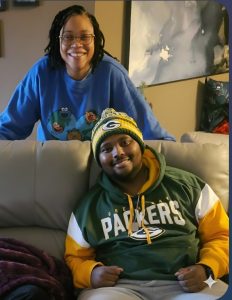
My name is Aisha Gray, and my son, Gregory Keith Perry Gray Jr., was born on March 30, 2001.
He entered this world quickly—a beautifully handsome baby boy weighing 9 lbs. 10 oz.—and became the younger sibling to his sister, Gianna. Gregory was born at St. Luke’s Roosevelt Hospital in Manhattan, New York, just like his sister. Everything about his birth and our transition home felt normal.
Shortly after, I received a letter informing me that Gregory had sickle cell trait. I knew this was a possibility, as my husband carried the trait while I did not. At the time, we were reassured by both family and physicians that sickle cell trait was benign—nothing to worry about, with no symptoms, and only a consideration for future family planning.
For 21 years, Gregory saw the same pediatrician. He lived a full and active life. Beginning at age 8, he played peewee football, basketball, AAU tournaments, ran track and field, and later played Junior Varsity and Varsity football as a running back at Iona Preparatory School in New Rochelle, NY. His only medical concern was asthma, diagnosed in elementary school, which we managed carefully so he could continue doing what he loved.
In 2019, Gregory graduated from Iona Preparatory and enrolled at the University of New Haven. He thrived—balancing a demanding six-course load, participating in student government, and pursuing an accelerated program to earn both his bachelor’s and master’s degrees in four years.
Then, in 2020, everything began to change.
Although Gregory never contracted COVID-19, he started experiencing symptoms he couldn’t fully explain—fatigue, fainting, body aches, and a persistent feeling that “something was off.” We sought medical answers. His pediatrician referred him to a cardiologist; testing and monitoring showed his heart was healthy. He was also referred to a neurologist for back pain, but delays in insurance approval postponed critical imaging.
On September 23, 2022, our lives changed forever.
Gregory began experiencing blood in his urine. His father rushed him to Mount Sinai Hospital in New York City. Initially suspected to have kidney stones, Gregory’s pain prompted further testing. After 24 hours of imaging and evaluation, we were told he had cancer and needed a biopsy.
On October 1, 2022, I accessed Gregory’s biopsy results through MyChart. That is when I first saw the words: renal medullary carcinoma (RMC).
As I researched, my heart broke all over again. RMC is rare, aggressive, often diagnosed at Stage IV, and historically associated with a survival rate of just a few months.
But we refused to give up.
While waiting for an appointment at Memorial Sloan Kettering, I came across a video featuring Dr. Nizar Tannir at MD Anderson Cancer Center and an RMC survivor. For the first time, Gregory saw someone who looked like him, shared similar symptoms, and had survived. That moment gave us hope.
We immediately reached out to Dr. Tannir, who responded with compassion and clarity. He reassured us that we were not alone and guided us on how to come to Houston for care.
In December 2022, I also connected with Ritchie Johnson, founder of the Chris “CJ” Johnson Foundation. Through this community, we found strength, understanding, and support from others facing RMC.
On February 20, 2023, Gregory and I arrived in Houston.
Our journey there was filled with both challenges and victories. What became clear was the difference in care approach. In New York, we often felt limited by systems and barriers. In Houston, we experienced a collaborative partnership—where Gregory had a voice, where options were explored, and where hope was actively pursued.
Despite every effort, Gregory passed away peacefully on February 10, 2025, at just 23 years old.
Gregory’s story does not end here. His life continues to inspire awareness, advocacy, and action. Through his journey, we are committed to educating others about renal medullary carcinoma and the realities of sickle cell trait, pushing for earlier detection, better treatment options, and equitable care. In his honor, we will continue to stand with other families, ensuring that no one faces this diagnosis alone—and that Gregory’s legacy lives on in every life we touch.